| What is liquid masterbatch? A comprehensive guide to liquid masterbatches |
| Data:2025-11-10 10:10:37 | Visits: |
Plastic coloring technology has undergone an evolution process from powder, masterbatch to liquid masterbatch. As a revolutionary coloring solution, liquid masterbatches are replacing traditional coloring methods in many fields. They not only enhance product quality but also fundamentally solve the problem of integrating production efficiency with environmental protection.
1. Definition and Core Technologies of Liquid Masterbatch
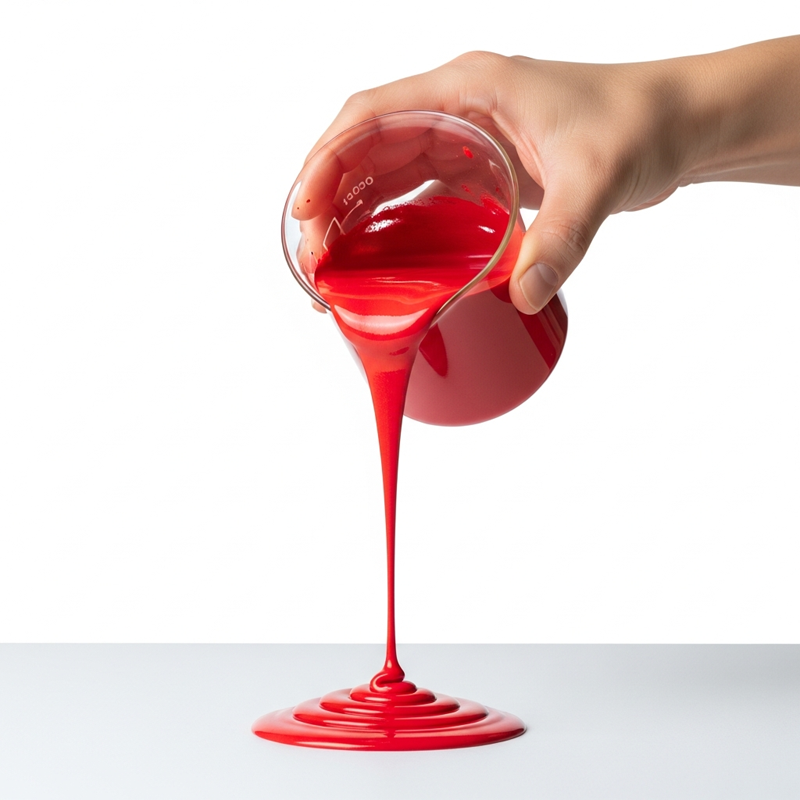
Liquid masterbatches are composed of pigments or dyes and dynamic polymers. The dynamic polymer in the product ensures the compatibility of pigments with plastics and promotes the uniform dispersion of liquid masterbatches.
The core innovation of this technology lies in its unique pre-dispersion characteristic. Unlike traditional colorants that rely on the mechanical shearing force of processing equipment for dispersion, liquid masterbatches complete the ultimate dispersion of pigments during the preparation stage. This enables the pigment particles to stably exist in their original state in the liquid carrier, eliminating the need for additional mechanical dispersion steps during use.
Liquid masterbatches demonstrate outstanding material adaptability, and their main application areas include:
General plastics: polyethylene (PE), polypropylene (PP), polyvinyl chloride (PVC), polystyrene (PS), etc
Engineering plastics: ABS, polycarbonate (PC), polymethyl methacrylate (PMMA), nylon series (PA6, PA66), polybutylene terephthalate (PBT), polyethylene terephthalate (PET), etc
Specialty plastics: thermoplastic polyurethane (TPU), thermoplastic elastomer (TPE), polyoxymethylene (POM), etc
Textile products: chemical fibers, etc
This wide range of material compatibility makes liquid color masterbatches an ideal choice for multi-variety and small-batch production enterprises.
Achieving clean and safe production: Liquid color masterbatches, with their liquid nature, completely eliminate the generation and flying of dust during the production process. This not only significantly optimizes the workshop environment but also effectively ensures the respiratory health of operators and production safety, helping enterprises easily cope with increasingly strict environmental protection reviews.
Significantly enhance color quality: This technology, by leveraging a nano-scale dispersion process , greatly reduces defects such as color spots and stripes on the product surface.
Reduce the comprehensive usage cost: Although the unit price of liquid color masterbatch is relatively high, its addition ratio is extremely low (usually 0.03% to 1.5%, only 20% to 50% of the traditional color masterbatch usage), while significantly saving color change time and cleaning materials , greatly improving equipment utilization and overall production efficiency.
Significantly simplify the process flow: Liquid color masterbatches do not require pre-mixing or granulation processing. They can be fully automatically and quantitatively added through high-precision metering pumps and directly integrated into existing production lines, greatly simplifying the production process and reducing the reliance on manual operation.
4. Application Examples in Various Industries
The application fields of liquid color masterbatches are extremely extensive, almost covering all plastic products industries:
Food packaging: FDA-certified liquid color masterbatches are used for mineral water bottles, food containers, etc., providing safe and bright coloring solutions
Electronic and electrical appliances: Used in high-end products such as mobile phone casings and electrical accessories, meeting the strict requirements for color consistency
Automotive industry: Applied to interior and exterior components, it offers excellent weather resistance and color stability
Textile fibers: Through the original liquid coloring technology, waterless dyeing is achieved, reducing water consumption and pollution
Toy manufacturing: providing children with safe and non-toxic colored toys
5. How to Transition to Liquid Masterbatch
Evaluation stage: Analyze the existing product quality issues, assess the equipment renovation requirements and investment budget, and select suppliers with strong technical capabilities.
Small-batch trial use: Select representative products for trial production, collect process data and quality effects, and calculate the actual economic benefits.
Comprehensive promotion: Develop a detailed promotion plan, train technical personnel and operators, and establish a complete quality monitoring system.
Equipment renovation: Add metering pumps and conveying systems based on production requirements to ensure compatibility with existing equipment.
Liquid color masterbatches are mainly added in two ways:
Coloring pump feeding: Use a dedicated metering pump to precisely draw the required amount and directly inject it into the melting section of the processing equipment
Direct dry mixing: The liquid color masterbatch is directly mixed with plastic particles for processing
A common issue is compatibility with the substrate. Different plastic materials have different polarity characteristics, which may affect the coloring effect. By choosing an appropriate carrier system and conducting thorough compatibility tests, such problems can be effectively avoided.
The accuracy of color matching is also a key point that needs attention. Although liquid color masterbatches offer better color consistency, it is still necessary to establish a sound color management system to ensure that batch-to-batch variations are controlled within an acceptable range.
|
| Prev:Preserving Juice Freshness: York's Dual Oxygen Barrier Solution Next:Why is liquid color masterbatch considered the mainstream choice for the future |