If you are new to liquid color masterbatch (often called liquid color in the industry), or are evaluating whether to switch from traditional colorants to a liquid coloring solution, the following questions and answers will help you quickly get a clear understanding.
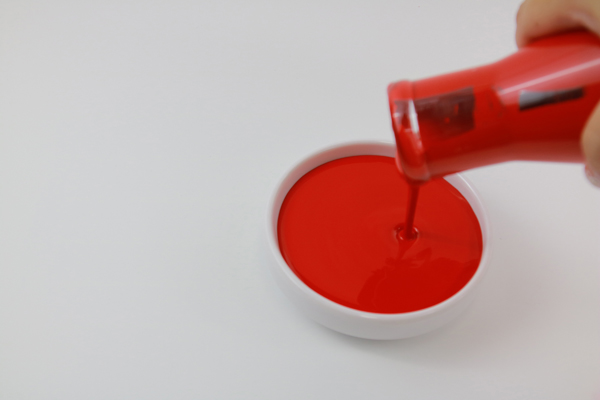
Yes, liquid color masterbatch and liquid color refer to the same product. It is produced by dispersing pigments or dyes uniformly in a liquid carrier after multiple grinding and high-intensity shearing processes. This liquid carrier ensures high compatibility between the pigment and the plastic substrate, allowing the colorant to disperse evenly in the resin, resulting in vivid colors and consistent batch-to-batch stability.
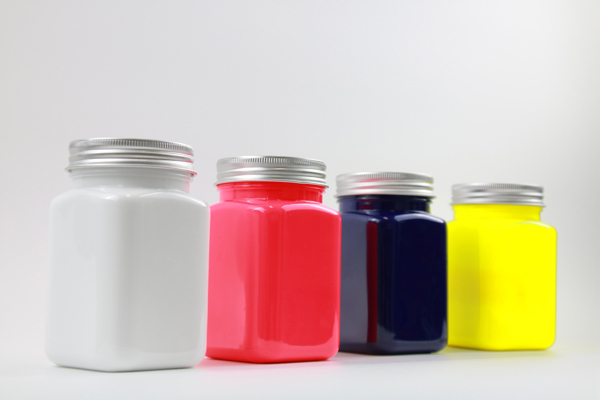
Comparison: Liquid color masterbatch vs. color powder vs. color masterbatch
First generation – Color powder. This is the most direct method, simply mixing pigment powder with plastic. Its advantage is low cost. However, the drawbacks are obvious: dust flies during use, polluting the working environment; dosing accuracy is difficult to control, easily causing batch color differences; color change cleaning is difficult and production efficiency is low.
Second generation – Color masterbatch. Color masterbatch is made by premixing, melting, extruding and pelletizing pigments with a carrier resin. It improves the dust problem, with significantly better dispersion and color uniformity, and is widely used in plastic coloring. Nevertheless, color masterbatch has a relatively high addition ratio and insufficient dispersion for ultra-fine pigments.
Third generation – Liquid color masterbatch. Compared with color powder and color masterbatch, liquid color masterbatch offers remarkable improvements in dispersibility, addition ratio, automation compatibility, and color change efficiency.
Advantage 1: Significantly lower addition rate. For light-colored or transparent products, the addition rate is typically only 0.03%–0.20%; for dark or solid colors, it is 0.5%–1.50%. The reduced addition directly lowers raw material costs, and because liquid color masterbatch has low volume and weight, transportation and warehousing costs are also reduced.
Advantage 2: Excellent dispersibility. The pigments in liquid color masterbatch spread quickly and evenly with the liquid carrier, without relying on strong screw shearing. This dispersion mechanism ensures highly uniform coloring, making it less likely to produce color spots, flow marks, or color differences.
Advantage 3: Fast and flexible color change. The feeding port of liquid color masterbatch is located at the lowest end of the drying hopper. Liquid color masterbatch does not pass through the drying hopper, so color change is faster, and the plastic inside the drying hopper is not contaminated and can be fully recycled.
Advantage 4: Outstanding environmental friendliness. Liquid color masterbatch generates no dust during use, fundamentally improving the working environment of the production workshop. In terms of production energy consumption, the use of liquid color masterbatch does not require melting, thus reducing energy consumption to a certain extent.
Advantage 5: Minimal impact on plastic physical properties. The addition rate of liquid color masterbatch is extremely low, and the liquid carrier has good compatibility with the substrate. The less carrier added, the closer the substrate remains to its original state, so the tensile strength, toughness and other physical properties of the substrate can be preserved to the greatest extent.
Advantage 6: High degree of automation. Liquid color masterbatch, when used with dedicated dosing equipment, enables fully automatic online addition without manual weighing or mixing. Operators only need to set the addition ratio at startup, and the production process runs automatically.
Liquid color masterbatch is compatible with mainstream molding processes such as injection molding, extrusion, and blow film. It covers common plastic substrates including PET, PP, PE, ABS, TPU, PA, PC, PS, etc.
York liquid color masterbatch is widely used across multiple industries:
-
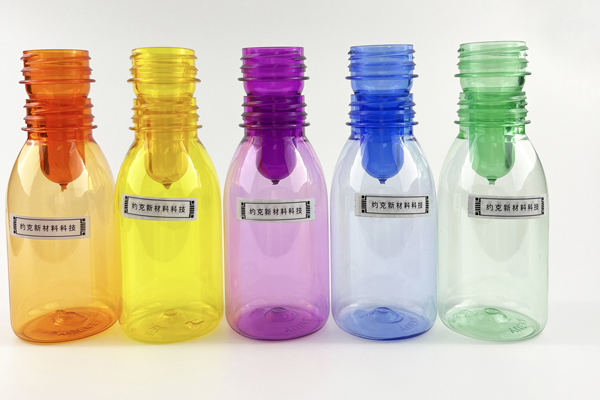
Food & beverage packaging: Transparent coloring of PET preforms and caps, e.g., Yili, Wahaha, Dali.
-
Daily chemical & cosmetic packaging: High-gloss coloring of cosmetic bottles, pumps and caps, e.g., P&G, Zenison.
-
Home appliances & electronics: Color customization of ABS housings and PC panels.
Yes. York provides a matching liquid color masterbatch dosing unit. The addition system includes the following modules:
-
Premixer: Placed between the hopper and the feeding throat. Through high-speed stirring, it premixes the liquid color masterbatch with plastic pellets before they enter the screw, achieving more uniform dispersion than traditional color masterbatch, while avoiding separation of colorant and pellets due to vibration, ensuring batch-to-batch color stability.
In operation, staff only need to set the addition ratio via the touch screen, and the equipment runs automatically – no manual weighing or mixing required.
As an advanced technology in the field of plastic coloring, the number of companies worldwide that have mastered this technology and achieved large-scale production is still limited.
-
PX series – Color liquid color masterbatch: Bright colors, no pigment spots, addition rate between 0.2% and 0.8%. Can be precisely matched to customer-provided color samples to meet personalized color requirements.
-
PM series – Pearl liquid color masterbatch: Even pearl dispersion, strong pearlescent effect, no pearl powder contamination. Suitable for cosmetic bottles, high-end daily chemical packaging and other applications requiring special gloss effects.
-
PB series – White liquid color masterbatch: High hiding power, does not affect the production process even at high addition rates. For thin-walled products requiring extremely high hiding power, York's white liquid color masterbatch achieves ideal coverage.
-
PT series – Functional liquid additives: Including oxygen scavengers, acetaldehyde scavengers, UV absorbers, light blockers and other functional products.
|

