| Powder, Masterbatch, or Liquid Color: Injection Molding Coloring Compared |
| Data:2026-06-04 16:17:05 | Visits: |
Choose the right colorant and your production runs smoothly; choose wrong and troubles follow. In the injection molding industry, pigment powder, solid masterbatch, and liquid color masterbatch are the three most common coloring methods. Each has its own characteristics and limitations. A side‑by‑side comparison makes the differences clear.
Pigment Powder – Lowest Cost, but Dust and Color Change Are Major Drawbacks
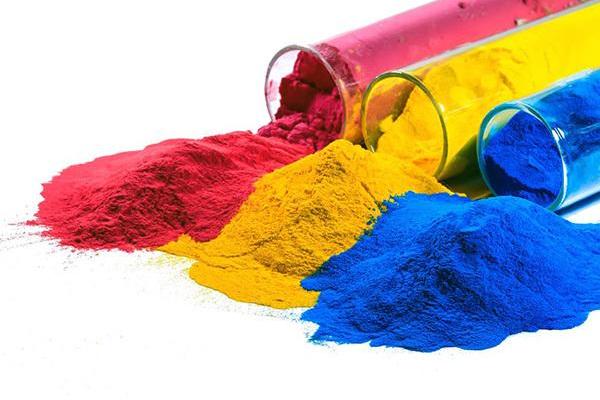
Pigment powder is the most traditional method. Dry pigment powder is mixed directly with plastic granules before injection molding.
Advantages: · Lowest cost – no intermediate processing; buy and use directly. · Flexible for small batches – best choice for a few hundred or thousand parts. · For thick‑walled injection molded parts, dispersion is adequate.
Disadvantages: · Serious dust issues – pigment powder flies everywhere during transport, weighing, and mixing, leaving residue on the workshop floor, equipment surfaces, and even in the air. · Difficult color changes – pigment powder sticks to the hopper, screw, and barrel walls, making cleaning very time‑consuming when switching from one color to another. · Color stability heavily affected by operator handling – errors in manual weighing and mixing lead to batch‑to‑batch color variation. · Not suitable for thin‑walled products – pigments do not have enough time to disperse fully.
Best for: Small‑batch injection molded parts where cost sensitivity is extreme, color changes are infrequent, and workshop dust is not a concern.
Solid Masterbatch – The Mainstream Method, but Carrier Compatibility Issues Exist
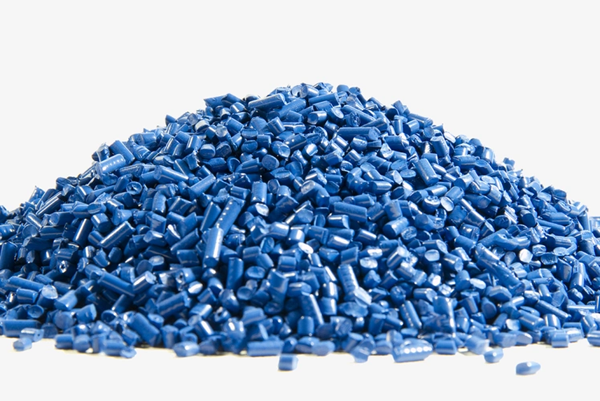
Solid masterbatch is a granular colorant made by pre‑mixing and pelletizing pigments with a carrier resin.
Advantages: · Dust‑free – pigments are encapsulated in resin pellets; clean during use. · Easier color changes than pigment powder – does not require extensive cleaning. · Easy color matching and dosage control – suitable for large‑scale production.
Disadvantages: · Higher cost than pigment powder – requires an additional pelletizing step. · Dispersion is limited – due to high addition rates (typically 2%‑4%) and short residence time in the screw, solid masterbatch sometimes disperses worse than pigment powder. · Carrier compatibility issues – if the carrier resin is incompatible with the base resin, the physical properties of the plastic part may change. · Minimum order quantity (MOQ) limitations – not suitable for very small batches or frequent color changes.
Best for: Most conventional injection molded parts, especially in production environments that are dust‑sensitive but do not require frequent color changes.
Liquid Color Masterbatch – Fast Color Change, Excellent Dispersion, Low Addition Rate
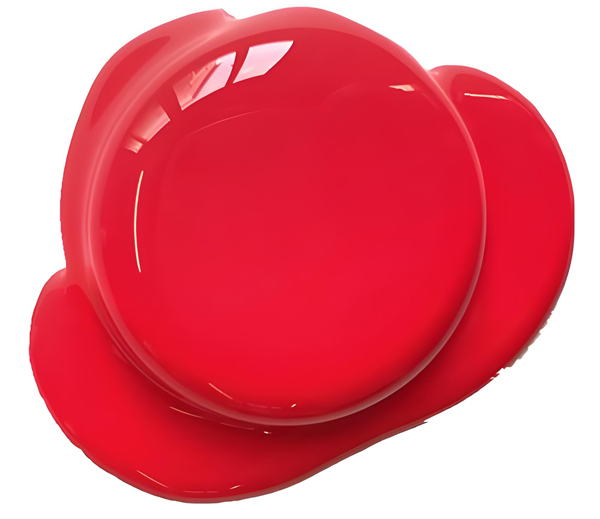
Liquid color masterbatch is a concentrated liquid pigment. The pigment is thoroughly ground and uniformly dispersed in a liquid carrier. No pre‑mixing is required; it is injected directly into the injection molding machine via a metering pump.
Advantages: · Extremely low addition rate – typical addition rate for York liquid color masterbatch is 0.03%‑1.5%, only 5%‑20% of solid masterbatch. · Best dispersion – the pigment is already pre‑dispersed in liquid form; once inside the screw, it only needs mixing, not shear force. Finished parts show virtually no black spots, flow marks, or color streaks. · Consistent batch‑to‑batch color – liquid color masterbatch is added automatically at a fixed ratio per batch, so coloring results are stable. · No dust pollution – fully enclosed pipeline delivery, meeting environmental and cleanroom requirements. · Minimal impact on base material properties – low addition rate does not interfere with the mechanical performance of the plastic. · No MOQ limitations – flexible for small batches and multi‑color orders.
Disadvantage: · Requires automated metering equipment (York can supply it).
Best for: Injection molded parts demanding high color consistency, excellent surface quality, and fast color change efficiency – such as electronic and electrical housings, personal care packaging, and automotive interior parts.
Selection Advice
York offers free trials and color matching services for liquid color masterbatch. Test the results on your own machine. |
| Prev:Comprehensive FAQ on Liquid Color Masterbatch Next:High-Concentration Liquid Color Masterbatch Dispersion |